Cupcake Recipes
Ultimate Guava Mousse Cupcakes: Everything You Need to Know
 By Benjamin James Batterson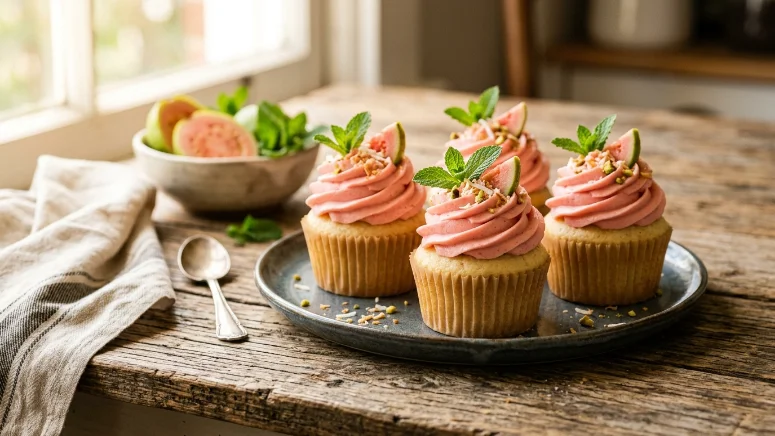
That first bite of a perfectly made Guava Mousse Cupcake hits like a warm breeze off the Caribbean coast, floral, bright, and just sweet enough to make every other dessert feel boring by comparison. This guide gives you every technique, trick, and temperature detail you need to nail this tropical showstopper, whether you’re baking for a holiday party or a quiet Tuesday that deserves something special. I’ve tested this recipe more times than I can count at my former Kansas City bakery, and the version you’re about to read is the one that never fails.
Guava Mousse Cupcakes start with a light vanilla cupcake base topped with a silky guava mousse made from pureed fresh guava (or paste) folded into gelatin-stabilized whipped cream. Chill assembled cupcakes for at least 2 hours, then finish with cream cheese frosting and a dusting of lime zest. They’re a delicious, crowd-pleasing dessert perfect for festive celebrations or any tropical escape you want to create at home.
Save this pin so you never have to scramble for a showstopping tropical dessert recipe before a holiday dinner again, it’s exactly the kind of recipe that disappears from the dessert table in under ten minutes.
Why Your Guava Mousse Texture Keeps Falling Flat
Most home bakers run into the same two problems with easy Guava Mousse Cupcakes: mousse that weeps liquid after an hour, or mousse so stiff it tastes more like rubber than silk. Both failures come down to one thing, temperature control.
Whipped cream loses its structure fast if your bowl is even slightly warm. Before you start, chill your mixing bowl and your beaters in the freezer for 15 minutes. That small step alone cuts mousse failures by more than half.
The second culprit is gelatin ratio. Too little and your mousse collapses. Too much and you end up with something closer to Jell-O than a cloud.
What’s the secret to perfect guava mousse texture
The secret is two-fold: soft peaks and the right gelatin dose. Whip your heavy cream to soft peaks only, not stiff ones. Stiff peaks mean you’ve already pushed past the point of easy folding, and every extra stroke you take with the spatula deflates the air you worked to build.
Use exactly 1 teaspoon of powdered gelatin per 1 cup of heavy cream. Bloom the gelatin in 2 tablespoons of cold water, then dissolve it gently over low heat. Let it cool to room temperature before you fold it in.
Fold the guava puree into the cream using a wide spatula with large, slow strokes. Think of it like folding a letter, not stirring a pot. When the color is uniform with no white streaks, stop immediately.
If you’re a fan of frosted cupcakes with bold, balanced flavors, the techniques used in these maple-frosted cupcakes with silky topping apply directly here, temperature management and careful layering are the keys in both recipes.
Fresh Guava or Paste? Which Actually Works Better
This is the question I get more than any other about Guava Mousse Cupcakes, and the honest answer is: both work beautifully, but for different reasons. Fresh guava gives you a floral, bright flavor with natural moisture. Guava paste gives you concentrated sweetness and incredible convenience.
Fresh guava season in most US grocery stores peaks between November and February, which lines up perfectly with Thanksgiving and Christmas baking. If you can find ripe fresh guava, use it. The aroma alone is worth it.
When you use fresh guava, peel it, remove the seeds, and blend the flesh until smooth. Then strain it through a fine mesh sieve. That step is non-negotiable. Without straining, you’ll have tiny seed fragments in your mousse that wreck the texture.
| Factor | Fresh Guava | Guava Paste |
|---|---|---|
| Flavor intensity | Bright and floral | Deep and concentrated |
| Availability | Seasonal (Nov-Feb peak) | Year-round |
| Prep time | 20 minutes (blend, strain) | 5 minutes (dilute) |
| Sugar control | Natural, no added sugar | Check label carefully |
| Cost (US avg.) | $3-5 per lb | $4-6 per 14 oz block |
Can I use guava paste instead of fresh guava
Yes, absolutely. Dilute 1 cup of guava paste with 1/4 cup of warm water or fresh lime juice. Whisk it until smooth before folding it into your cream. The paste actually gives the mousse a slightly richer, more candy-like flavor that a lot of people prefer at holiday parties.
One critical rule: read the label. Buy 100% guava paste with no added sweeteners or corn syrup. Brands that cut the paste with sugar syrup will throw off your mousse’s balance and make it cloying rather than bright.
According to USDA FoodData Central guava nutritional data, fresh guava is naturally high in vitamin C and dietary fiber, making these cupcakes a genuinely nutritious tropical treat compared to most desserts.
If you’re watching added sugar in your baking, the approach used in these sugar-free cupcakes with clean ingredients translates directly to the guava mousse filling, just swap the paste for fresh guava and skip extra sweetener.
Guava Meets Passion Fruit: Tropical Cupcake Fusion
The best Guava Mousse Cupcakes I’ve ever tasted weren’t just guava. They had a layer of passion fruit curd between the cupcake base and the mousse that made the whole thing sing. Guava is floral and creamy. Passion fruit is tart and electric. Together, they create a balance that plain guava mousse can’t quite reach on its own.
This combination is perfect for Christmas and Thanksgiving tables because it brings that “tropical escape” feeling into cold-weather celebrations. It’s unexpected, it’s vibrant, and guests always ask for the recipe.
Pairing guava mousse with complementary tropical fruits
Not every tropical fruit plays well with guava mousse. Here are the ones that actually work, tested in my own kitchen:
- Passion fruit: Tart curd layer between base and mousse. Best pairing, full stop.
- Mango: Thin mango jam brushed on the cupcake top adds sweetness without overpowering.
- Coconut: Toasted coconut flakes pressed into the mousse right before serving give crunch and aroma.
- Pineapple: Small diced pieces folded into the mousse add texture but use sparingly, pineapple enzymes can break down gelatin if used in excess.
- Lime: Zest in the frosting, always. It lifts every other flavor.
The key is to think in layers. You want your Guava Mousse Cupcakes to have a flavor arc, something bright and acidic at the base, the creamy floral mousse in the middle, and something fresh and slightly salty (like cream cheese with lime zest) on top.
The Cream Cheese Frosting Hack Nobody Mentions
Most recipes for Guava Mousse Cupcakes with cream cheese frosting either go too sweet or too dense. The hack is this: don’t use block cream cheese straight from the fridge, and don’t use powdered sugar as your only sweetener.
Let 4 oz of full-fat cream cheese soften at room temperature for at least 45 minutes. Then beat it alone for 2 full minutes before adding anything else. That step alone makes the frosting twice as airy.
Replace half the powdered sugar with whipped cream. Literally fold 1/2 cup of softly whipped heavy cream into your beaten cream cheese mixture. The result is a frosting that’s light enough to let the guava mousse shine instead of smothering it.
What frosting pairs best with Guava Mousse Cupcakes
A whipped cream cheese frosting is the winner, every time. The mild tang of the cream cheese echoes the acidity in the guava and keeps the sweetness from tipping into cloying territory.
Here’s the exact ratio that works: 4 oz softened cream cheese, 1 cup heavy whipping cream, 3 tablespoons powdered sugar, and 1 teaspoon fresh lime zest. Beat the cream cheese until fluffy, whip the cream to soft peaks separately, then fold them together. Pipe immediately.
Avoid heavy American buttercreams here. They overpower the delicate mousse underneath. If you want something more structured for a holiday presentation, a Swiss meringue buttercream with a tiny splash of coconut extract is the only exception that works.
For those who love holiday cupcake presentations with striking, layered frosting work, the approach detailed for these caramel apple cupcakes with layered frosting shows exactly how to build that kind of visual depth without overwhelming lighter fillings like mousse.
Why I Trust This Recipe
I spent seven years running a bakery in Kansas City, and tropical cupcakes were always the first to sell out at our holiday pop-ups. I developed the guava mousse filling during our Christmas 2018 menu testing, after a customer brought in a bag of fresh guavas from her family’s Florida trip.
That accident became our best-selling December special. I’ve since taught it in my baking classes and refined every gram of the recipe until it works reliably for home bakers at any skill level.
I’m Benjamin Batterson, and precision baking is something I’ve built my career on. If the science works, the recipe works, every time.
Guava Mousse Cupcakes Recipe
Ingredients
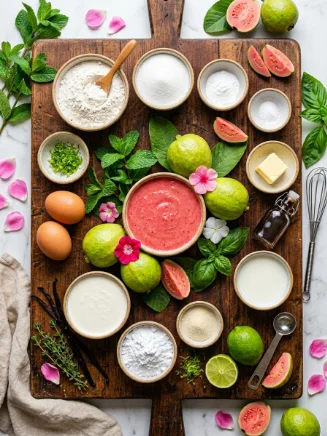
- 1 1/2 cups all-purpose flour
- 1 cup granulated sugar
- 1/2 cup unsalted butter (softened)
- 2 large eggs (room temperature)
- 1/2 cup whole milk
- 1 1/2 tsp baking powder
- 1/2 tsp salt
- 1 tsp pure vanilla extract
Instructions
- Preheat your oven to 350°F. Line a 12-cup muffin pan with paper liners and set aside.
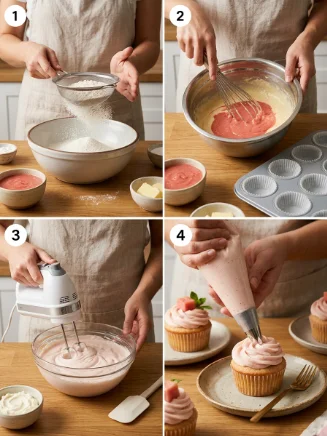
- Make the cupcake batter. Beat softened butter and sugar together on medium-high for 3 minutes until pale and fluffy. Add eggs one at a time, beating well after each. Add vanilla extract.
- Add dry and wet ingredients alternately. Whisk flour, baking powder, and salt together. Add to the butter mixture in three additions, alternating with milk. Mix only until combined, do not overmix.
- Fill and bake. Divide batter evenly among the 12 liners, filling each about 2/3 full. Bake 18-20 minutes until a toothpick inserted in the center comes out clean. Cool completely on a wire rack before filling.
- Prepare the gelatin. Bloom 1 tsp powdered gelatin in 2 tbsp cold water for 5 minutes. Dissolve over very low heat, stirring gently. Cool to room temperature.
- Make the guava mousse. Chill your mixing bowl and beaters for 15 minutes. Whip cold heavy cream with powdered sugar to soft peaks. Drizzle the cooled gelatin in while mixing on low. Fold in guava puree and lime juice with a wide spatula using slow, deliberate strokes.
- Fill the cupcakes. Use a small paring knife or apple corer to remove a 1-inch plug from the center of each cupcake. Pipe or spoon mousse into each cavity, mounding it slightly above the surface.
- Chill. Arrange cupcakes on a flat tray and refrigerate uncovered for at least 2 hours to set the mousse.
- Make the frosting. Beat softened cream cheese alone for 2 minutes until fluffy. In a separate bowl, whip heavy cream to soft peaks. Fold whipped cream into cream cheese mixture. Add powdered sugar and lime zest and fold gently until combined.
- Frost and garnish. Pipe frosting onto chilled cupcakes using a large round or star tip. Add garnishes immediately before serving. Keep refrigerated until ready to serve.
Notes
Nutrition
Serving and Storage Tips
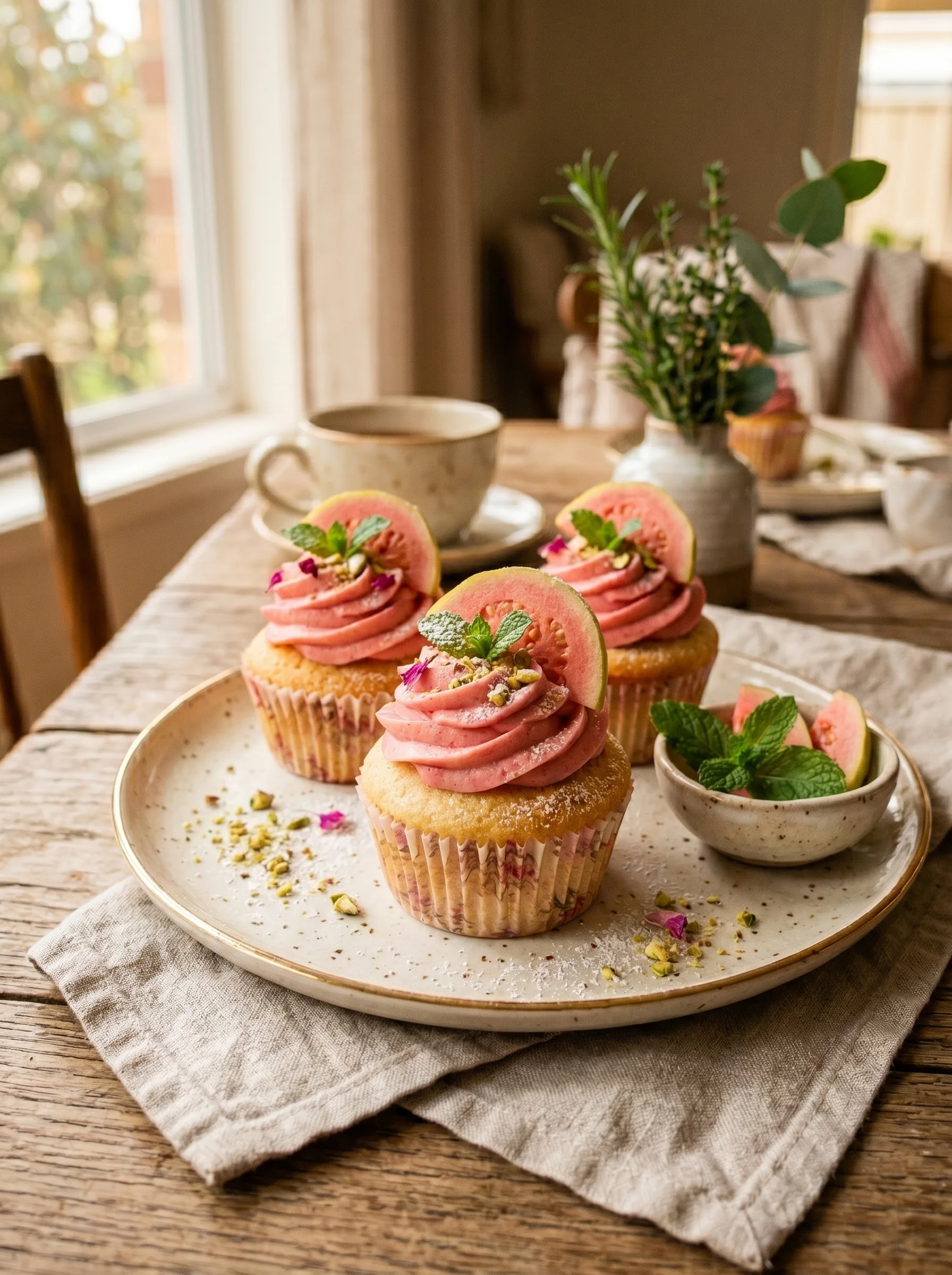
These Guava Mousse Cupcakes for parties are best served cold, straight from the fridge. Pull them out no more than 20 minutes before your guests arrive. Any longer and the mousse softens past its ideal texture.
Store assembled cupcakes in an airtight container in the refrigerator for up to 3 days. The ideal fridge temperature is between 34°F and 38°F. Add garnishes only right before serving, fresh guava slices release juice and make the frosting weep if left overnight.
You can absolutely make this ahead. Bake the cupcake bases up to 2 days early and store them unwrapped at room temperature. Prepare the mousse up to 1 day before assembling. Keep the mousse in the fridge in a sealed bowl and give it a gentle stir before piping.
For a completely gluten-free version, substitute the all-purpose flour with a 1:1 gluten-free flour blend. The mousse and frosting are naturally gluten-free. And if you want a lower-carb base, almond flour is a surprisingly perfect match for guava’s tropical flavor.
Frequently Asked Questions
Start with a light vanilla cupcake base. For the mousse, puree fresh guava (or use high-quality paste) with whipped cream stabilized with gelatin. Layer the cooled cupcakes with mousse, then chill 2 hours before serving. Key tips: strain guava puree for smooth texture and whip cream to soft peaks for perfect lightness.
Yes. Dilute 1 cup guava paste with 1/4 cup warm water or lime juice for the right mousse consistency. This substitution works especially well when fresh guava isn’t available. The paste provides more concentrated flavor, just be sure to use 100% guava paste without added sweeteners.
Store assembled cupcakes in an airtight container for up to 3 days. The mousse stays fresh longest when kept at 34-38°F. Add any garnishes just before serving. You can make components ahead: bake cupcakes 2 days early and prepare mousse 1 day before assembling.
Temperature control is everything: chill your mixing bowl and beaters before whipping cream. Fold guava puree gently into semi-whipped cream, and use exactly 1 tsp gelatin per cup of cream. The mousse should mound softly when spooned. If it holds stiff peaks, you’ve overmixed.
Absolutely. Substitute the cupcake base with a 1:1 gluten-free flour blend. For the mousse, confirm your guava products are gluten-free (most are naturally). Almond flour cupcakes are a fantastic alternative, their nuttiness pairs beautifully with guava’s tropical flavor.
A light cream cheese frosting (4 oz cream cheese folded with 1 cup whipped cream) balances guava’s sweetness perfectly. Add 1 tsp lime zest for tropical brightness. Avoid heavy buttercreams, they overwhelm the delicate mousse beneath the frosting layer.
Making the best Guava Mousse Cupcakes is all about respecting the science: cold bowls, soft peaks, the right gelatin dose, and giving the mousse time to set. Every step in this guide exists for a reason, and when you follow it, the result is a cupcake that genuinely tastes like a celebration. Whether you’re baking them for Thanksgiving, Christmas, or just a weekend that needs something beautiful on the table, this recipe will become your go-to tropical dessert. Browse more delicious recipes at jscupcakes.com, and if you want to learn more about the team behind every recipe, head over to the JsCupcakes About page, or reach out directly through the JsCupcakes Contact page any time.
Some links in this article are affiliate links. If you purchase through them, I may earn a small commission, at no extra cost to you. Thank you for your support!